E-CARD News

Vaughan Public Library chooses E-CARD for new print/copy cost recovery solution

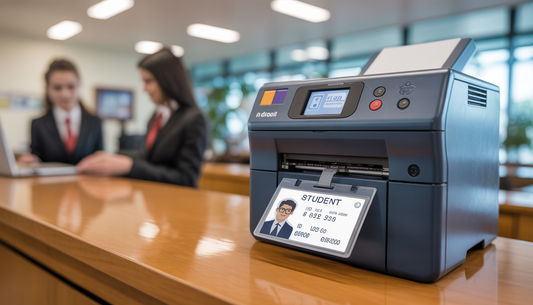
We are currently working with a new client, Vaughan Public Libraries in Ontario, to install our print management solution with a web print feature. Vaughan Public Library includes 7 libraries and has over 130,000 patrons.

Vaughan Public Libraries approached us, as they were interested in a wireless printing solution for their patrons. The reason for this was that they were finding that more and more of their patrons were bringing their own wireless devices to the library and wanting to print documents from them.

Our print management solution was a perfect answer to the library’s wireless printing issue. To create a better, user-friendly environment for their patrons, our partners at Monitor added a new feature to Web Print allowing users to login using a ‘User entered job ID’. This new feature allows Vaughan’s library patron’s to log into Web Print using a secure password that they have created.

The user would log into Web Print using with their User ID (this is chosen by the user at the time of logging in) to access the Web Print page. They would then select the location they wish to print to and upload their document, URL or email. Once the user has submitted the print job, they will then go to the print release station, enter the same User ID again and their jobs will be displayed ready to be printed.

This is available on Supervisor Net 6.6.3 and upwards. If you are interested in this feature please contact us today!

Our Phone’s are back up!

Sorry for the downtime yesterday on Monday, May 7th, 2012. Our phone system is back online after a brief outage.

Thank you for your patience.

May 7th 2012: Our Phone Lines are Down until Tomorrow. Be on the lookout for copper thieves in your neighbourhood.

May 7th, 2012 Update:

Our apologies to anyone trying to call us today. Our phone lines are down.

There was a large copper wire theft that took down most of the area’s phone lines at our main office last night.

We’re told that our phone’s should be back up tomorrow.

In the meantime, you can still email us at sales@IDexperts.com should you need to place an order or ask us anything.

Thanks for your patience.

News Details:

http://www.news1130.com/news/local/article/360085–wire-thieves-hang-up-911-services-for-hundreds-in-delta

E-CARD is now selling the best in end-to-end physical security solutions.

We are now an Authorized March Networks Provider!


March_Networks_logo


E-CARD is now selling the best in end-to-end physical security solutions. March Networks is the leading provider of complete IP video to help reduce losses, mitigate risks, improve security and work more efficiently.  The March Networks product line ranges from high-definition IP cameras and embedded video analytics to Video Management System (VMS) software running on industry-standard servers.  March Networks Command –VMS software – works with best-in-class IT servers or the March Networks family of hybrid network video recorders (NVRs). It also supports high-definition IP cameras, encoders and embedded video analytics, helping transition from traditional CCTV systems to IP video networking cost-effectively and at your own pace.

March Networks and E-CARD want to offer you a chance to try Command Lite for yourself.
·         Free software download
·         Up to 6 video channels and 1 week of recording
·         Web-based user interface (Internet Explorer, Safari, Firefox, Chrome)
·         Easily upgraded to Command Professional or Command Enterprise versions

Command Lite is the free version of the March Networks Command video management platform. Ideal for smaller businesses with limited camera and retention requirements, the software is also a convenient way for solution providers and larger organizations to evaluate Command’s capabilities for themselves.

Download Command Lite now and in minutes you’ll have access to live and recorded video, plus advanced search and health monitoring features.  No complex setup necessary!  Let us know what you think and we can discuss Command Professional and Command Enterprise capabilities.

Click here to download your Free copy now: http://www.marchnetworks.com/products/vms/command-lite/download.aspx

Discontinuance of the Zebra P110i, P110m, and P120i Card Printers

Discontinuance of the Zebra P110i, P110m, and P120i Card Printers

Zebra Technologies is announcing the discontinuance of the P110i, P110m, and P120i card printers. The following has been communicated to card PF partners, and will appear in the April 12th issue of Bars & Stripes.

Orders placed by June 30, 2012, will be scheduled for shipment from a Zebra location no later than July 31, 2012, subject to product availability. New orders will not be accepted after June 30, 2012. Service, parts and support will continue to be available for approximately five (5) years from the discontinuance date, subject to parts availability.

The following schedule will be used in discontinuing the P110i, P110m and P120i card printers, including the associated QuikCard ID Solution bundles. The ZXP Series 3 is the recommend replacement printer.

Printer/Bundle Part Numbers Replacement Product
P110i-xxxxx-xxx

P110m-xxxxx-xxx

P120i-xxxxx-xxx

Z31-xxxxxxxxUS00

Z32-xxxxxxxxUS00

P110i-0000A-IDB

P110i-0M10A-IDB

P120i-0000A-IDB

P120i-0M10A-IDB

Z31-0000B000US00

Z31-0000C000US00

Z32-0000D000US00

Z32-0000E000US00

Last Order Date Last Ship Date Product Support Discontinuance
6/30/2012 7/31/2012 7/31/2017
*Zebra Distributor partners will continue to sell the Value class printers beyond the above date, or until their last return date of 8/31/12.

Zebra Press Release

Facebook Update: Timeline for Business

Facebook Update: Timeline for Business

Facebook has just refreshed the way business pages can look with their Timeline Update. We’ve refreshed our page to follow those guidelines. Come check out our new page and “like” us if you haven’t already. We keep our facebook, twitter, and linkedin pages updated with the latest Industry and E-CARD news.

We’ll also have educational updates very soon!


http://www.facebook.com/IDexperts

Using PKI for physical access control

Using PKI for physical access control

Physical security professionals are hearing about public key infrastructure, or PKI, more frequently than ever before. This is because the federal government, through the National Institutes of Standards and Technology and the Interagency Advisory Board (IAB), are pushing for higher security in the physical access control world.

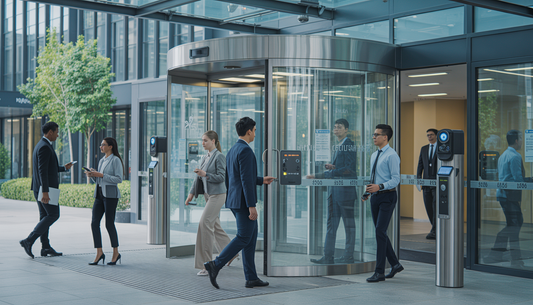
The federal government says physical access control systems (PACS) need to be upgraded to be FIPS 201 and SP 800-116 compliant. Depending on the level of assurance required for entering the space, each door or turnstile will be secured by an authentication system capable of verifying one or more authentication factors before granting access.

A traditional access control reader provides one authentication factor, which results in “some” assurance. A single factor is the minimum standard for controlled access defined by SP 800-116. Readers with PIN pads can be used to provide two factors, and readers with a fingerprint sensor or iris scanner can provide three.

A FIPS 201-compliant contactless card reader must also ensure that the credential being presented is the one that was originally enrolled in the PACS rather than a forgery or clone.

Access control systems can use PKI at the door to accomplish this and determine a card’s authenticity. The process uses private and public keys to sign and verify a random challenge sent to the smart card. Only an original, legitimate card can respond correctly to the challenge.

Where does PKI at the door live?

There are three basic configurations for PKI at the door:

1. The challenge is generated at the panel and sent to the reader where it is passed to the card. The reader is effectively a transparent smart card reader that passes smart card commands and responses between the card and the panel. Cryptographic processing of the response from the card is performed at the panel and certificates and certificate revocation status are cached at the panel.

The advantage of this approach is that it does not require extra boards or equipment, and it is highly resilient because the panel is designed to operate offline from the server for long periods of time. The downside is that the panel needs to be upgraded to perform PKI at the door.

2. The challenge is generated at the PACS server and sent to the reader, which passes it to the card. The reader passes the response back to the server, which then verifies the response and issues a message to the appropriate hardware to unlock the door.

This solution works with all panels today can handle hundreds of doors concurrently. It has an early advantage because there is no need to update panel firmware. The disadvantage is that its reliability depends upon server availability, although this is mitigated with a backup server.

3. The challenge is generated by an additional board or controller and is sent to the reader, which passes it to the card. The reader passes the response back to the controller where it is verified. Depending on the verification results, the card identifier is sent to the access control panel.

There is no need to update the panel firmware with this approach. Because it operates closer to the door, it is designed to operate independently of a server for long periods of time – much like a panel. On the negative side, a separate controller adds cost in equipment and wiring.

With all three approaches, data is sent over multiple hops from the card edge to the PACS.

With each hop, the data needs to be secured using encryption.

Is PKI at the door for everyone?

All of this data processing takes time. Factors, such as the type of card and type of connectivity between devices, cause card authentication times to range from one to several seconds.

The good news is that once a cardholder has authenticated with the requisite factors to enter a particular area there is no need to re-authenticate unless a security area requiring even higher assurance is nested within it. Even then only the additional assurance factors are required. Therefore, security managers should plan their SP 800-116 security zones with an eye on minimizing cost while maximizing throughput and security.

What does the future hold for PKI at the door?

While a physical card is the primary means for gaining access into a high-assurance area, near field communications (NFC) is quickly becoming standard in mobile phones. With NFC, the phone becomes both a credential and a reader. Combined with cloud services, NFC can dramatically lower the costs of PKI at the door by eliminating panels and reducing wiring to an NFC terminal connected to a door relay.

This type of solution won’t work in every environment, but it will provide organizations with additional options, especially in the commercial market. NIST and IAB are already looking into this technology and security companies are gearing up for it.

The trickle down effect–where the mainstream market embraces technologies first implemented by the government–will play a large role in the adoption of PKI in the physical security market as a high assurance validation method.


By Bob Fontana, President and CTO, Codebench

Original Article from SecureIDNews: http://www.secureidnews.com/2012/02/27/using-pki-for-physical-access-control


Three reasons why ID theft increased in 2011 and how you can protect yourself.

Three reasons why ID theft increased in 2011 and how you can protect yourself.

ID theft increased by 13 percent in 2011 over the previous year, according to a new study from Javelin Strategy & Research. Find out why and how you can protect yourself better.

Last year saw an increase in identity theft incidents when compared to 2010. According to a fraud report from Javelin Strategy & Research, there has been an increase of 13 percent in ID Theft for 2011, and some of the blame can be pinned on the rise of social media and smartphone use.

In 2010, roughly ten million adults were victims of ID fraud; that number is now up to 11.6 million adults in 2011. Javelin Strategy & Research’s long-running study surveyed 5,022 US consumers in October 2011 in order pinpoint the impact of fraud, as well as the prime areas of vulnerability. The fraud report found that, in 2011, the main catalysts for the rise in ID theft incidents were the rampant data breaches, negligent smartphone security and publicly displayed personal information on social media sites.

Interestingly, while the fraud incidents are higher for 2011, the costs of identity fraud haven’t increased. Compared to 2004, the consumer’s out-of-pocket costs have actually decreased by 44 percent. The report believes that this is due to the crack-down on authentication by institutions, as well as consumer awareness efforts by the government and institutions. Last spring, seeking to minimize identity theft, Obama administration put forth a new plan known as the National Strategy for Trust Identities in Cyberspace (NSTIC); the administration is currently trying to convince internet companies to comply with one standardized Internet login system.

“While identity fraud incidence increased last year, it is becoming less profitable for fraudsters. Consumers, the financial services industry, law enforcement and government agencies are stopping fraud earlier and making new account fraud more difficult to perpetrate,” said Javelin Strategy & Research president, James Van Dyke.

Three ID theft catalysts

Key to the large number of fraud incidents was the increase in data breaches we saw in 2011; Sony had its infamous PSN data breech where an estimated 100 million users’ data was compromised. Javelin reports that there was a 67 percent increase in the number of Americans impacted by data breaches last year. The three most common items found to be exposed in a breech are: Credit card number, debit number and social security number. The research found that data breach victims are 9.5 more likely to have an identity fraud incident.

Javelin also found that certain social behaviors put consumers more at risk. Despite warnings that fraudsters often use social media as a resource, the research found that users were sharing a large amount of personal information on their networks; the same type of information used to authenticate identity by institutions. The study found that, of those who had public profiles, 68 percent shared their birthday information, 63 percent shared their high school, 12 percent shared their pet’s name and 18 percent even shared their phone number.

Though Javelin said there is “no proof of direct causation,” Google+, Twitter, Facebook and LinkedIn had the highest incidence of fraud. LinkedIn users were twice as likely to have reported being an identity theft victim.

As far as smartphone users go, the survey found that seven percent of owners were victims of ID theft. Mobile. Javelin believes that these users could benefit from updating to newest OS whenever possible, using a password on their home screen, and to avoid saving login information on their devices.

How to protect your ID

The research firm offers some tips for those of you worried about your data. On the prevention-side. Always keep your personal data private. That means keep your data secure with passwords or in a locked storage device and never pay your bills on a public WiFi hotspot. Also, obviously keep key personal information on social networking sites, like your cat’s name, or your birthday, private. On the mobile-front, be sure of the apps you download, the data shared on public WiFi and of course, watch where you leave your phone.

Prevention can only do so much, so create a system to detect fraud early. Make sure you monitor credit/debit accounts via your institution’s website and set up an alert system to be sent to your mobile or email. Try looking into some of the identity theft services which offer credit monitoring, fraud alerts, credit freezes, database scanning etc.; many can be found for free or for no cost.

Lastly, if a problem does arise, make sure you report it as quickly as possible. The sooner you act, the less you will lose and the more likely law enforcement can catch the fraudsters.

This article was originally posted on Digital Trends

By Jeff Hughes

http://www.digitaltrends.com/mobile/why-id-theft-increased-in-2011-and-how-you-can-protect-yourself/

Page 1 of 212

Sign up for our Newsletter

* = required field

Address:

Vancouver Office (Main):
200-7560 Vantage Way, Delta, BC, Canada V4G1H1

Toronto Office:
1200-251 Consumers Road, Toronto, ON, Canada M2J4R3

Toll Free: (888) 983-2299
Vancouver: (604) 940-2298
Toronto: (416) 360-0948

Customer Support:

E-CARD Customer Care representatives will respond to your email request within 24 hours.

Please include your phone number so we can call you back right away to work through the issue.